Category Archives: Animals! Animals! Animals!

Elephant Sex: Review of Modac

Standard

[amazon template=image&asin=0060929510]In April 2015, I read a book called Modoc: The True Story of the Greatest Elephant That Ever Lived by Ralph Helfer. If you are interested in Elephant Sex, go ahead and read my review, which follows.

The subtitle of this book is “The True Story of the Greatest Elephant That Ever Lived,” but it reads more like a piece of adventure fiction. The author says the story is true, and I don’t doubt that most of it is. However, the author doesn’t offer any sources (no bibliography, no end notes), doesn’t even say he spoke extensively to Bram and/or Gertie Gunter. Helfer does mention in his author’s note that he used “research and documented proof, which may-or may not-be true.” He also mentions “‘hearsay’-that which people tell you is factual,” but he never says what people he talked to. Finally, he writes the sentence that makes me wonder… “Then a little (poetic) political license is taken.” What does that mean? I take it to mean the author embellished the story, but when and where?

The part of this book that bothered me most was all the direct quotes. How can a true story include so much dialogue? Did people really remember exactly what they said 30, 40, 50 years before? I doubt it. Why use direct quotes if you can’t be sure you’re quoting directly? Usually when authors make up dialogue, they note that they’ve done so, saying it was written to the best of their (or their subjects’) recollection. Nothing like that here, just direct quotes on page after page.

I guess a reader of nonfiction never really knows what parts of a true story are true and what parts are embellishment.

The book is well written and kept me interested, kept me reading. It is an adventure story, and what an adventure Modac and Bram (her trainer-companion-best friend) have. They survive a shipwreck in the Indian Ocean. They live in an Elephantarium somewhere in India. They meet the Royal White Elephant, which no one was allowed to see without permission from the maharajah. They work in the Indian teak forests. They are forced to go to war. They are a huge success in a circus in the United States. So much happens to the elephant and her boy!

Someone asked if this book is suitable for kids. While there are a few mentions of human sexuality (two older teenagers are described as engaging in “romantic intimacy” and there is a reference to a heterosexual couple playfully wrestling and the young woman being surprised by the man’s “hardness”), there’s an entire elephant sex scene. The male elephant’s “erect penis was bursting for attention…Some six feet in length, perhaps weighing twenty-five pounds, and prehensile…” (Prehensile?! Prehensile?!) After the cow elephant was introduced, “[she] spread her hind legs to support the bull’s weight…The penis had searched and found the vulva. Insertion was imminent…As the delicate tips of their trunks met, the orgasm erupted.” Don’t give this book to your 10 year-old unless you want to discuss all that at the breakfast table!


Honestly, I’d be more worried about kids being subjected to the violence in this book. There is quite a bit of violence here, much of which I did not want to read. The shipwreck scene and its aftermath are scary. A man is executed (death by elephant) for killing his wife. Bandits try to steal an elephant and kill her human friend, and she (the elephant) gets vengeance. A woman escapes rape only through death. Elephants and their people are forced to go to war when rebels take over their village. War leads to injury and death. Modoc is mistreated by strangers throughout this book, sometimes in extremely violent ways.

If I were responsible for children, I wouldn’t let anyone under the age of 15 read this book unless I knew s/he possessed a high level of maturity. Even so, I would read the book first and have frequent (possibly chapter by chapter) discussions of what the characters were experiencing. This book offers a lot of possibilities for nightmares, so I’d offer a lot of possibilities for talking through all those scary parts.

International Tiger Day

Standard

It’s International Tiger Day!

IMG_2204

I took this photo of one of the tigers at Out of Africa Wildlife Park in Camp Verde, Arizona. Unfortunately, I can’t remember her name, but I do remember that one of her parents was an orange tiger and the other was a white tiger. That’s why she’s orange and white.

In 1913, there were 100,000 wild tigers. In 2014, tiger experts estimated there were only 3,000 tigers in the wild.

International Tiger Day is held annually on July 29 to give tigers worldwide attention. It is both an awareness day and a celebration. It was founded at the Saint Petersburg Tiger Summit in 2010. The goal of Tiger Day is to promote the protection and expansion of wild tiger habitats and to gain support through awareness for tiger conservation.

Learn more about  International Tiger Day here: http://tigerday.org/.

Chalet, the white tiger from Out of Africa wildlife park.

I took this photo of Chalet, a white tiger from Out of Africa Wildlife Park.

Cows in the Meadow

Standard

Little Boy Blue, come blow your horn.
The sheep’s cow’s in the meadow…

For my day off on Tuesday, I went halfway to civilization where I pick up my mail. The post office is in a building with a restaurant, bar, general store, and gift shop. The building has internet access, so on my days off when I don’t want to deal with the heat and people in Babylon, I go twenty-five miles, buy a cup of coffee and a meal, and spend eight or nine hours using the internet. The food is decent (not great, but decent), and there’s one booth with an electrical outlet next to it. I’ve gotten friendly with the woman who’s the waitress and the cook all morning, and we chitchat a little when she comes by to see if I need anything. There’s never been a crowd any day I’ve been in there, so no one seems to mind if I take up a whole table for a whole day.

It was after five o’clock when I packed up and headed out on Tuesday afternoon, so it was close to 6pm when I got to my campground.

The first thing I noticed upon arrival was that the half of the gate still standing at the entrance to the campground was blocking half of the road. I stopped the van and got out to investigate.

Sometime back (I don’t know when exactly), a huge tree fell and smashed half of the gate, which is meant to block the access road when the campground is closed in the winter.

IMG_3247

This photo shows the tree that fell and destroyed half of the gate into my campground. The brown metal pieces are the remains of the gate. The gate seems to have been made of strong and sturdy metal, and the tree just SMASHED it when it fell onto it.

IMG_3245

This photo shows the side of the gate that’s still standing and is tied to a thin-branched bush with yellow plastic “caution” tape.

To hold open the half of the gate that’s still standing, someone had tied yellow plastic “caution” tape to the gate and to a thin-branched bush.

What I found when I surveyed the scene was that the “caution” tape had broken and allowed the gate to swing across the road. I swung the gate out of the roadway and managed to tie the remainder of the tape to the gate, holding it out of the way.

I’d only driven a little ways down the road when I looked to my left and in the meadow saw faces–cow faces! By cows I mean cattle. I’m guessing they were females because I don’t think bulls usually run around with the ladies, but I did not check bovine genitalia.

There seemed to be a lot of faces staring at me, but I didn’t get a head count.

I had an idea that if cows were in the meadow, their people must be in the campground, but when I got to the campground, I found it deserted.

I wasn’t sure what to do. Bovine invasion had not been covered in our training. Was it ok for them to be in my meadow? Did I need to report their presence, and if so, to whom? I figured my best course of action was to drive the three miles back to the neighboring campground and ask the other camp hosts what I should do.

The other camp hosts didn’t seem worried about the cows and said I didn’t need to report them to anyone. The man half of the camp host couple said he’d worked on a ranch. He told me these were half wild mountain cows who don’t see people much. It seems like they’re turned out to fend tor themselves during the dry summer months, then are probably rounded up for the winter. These are probably some of the same cows I’ve seen on the road on my way to and from the hot springs.

The camp host man said I shouldn’t let myself get between a mamma cow and her calf. He said a mamma cow separated from her calf could be as dangerous as a mamma bear separated from her cub.

He also said if the cows were bothering me, he’d come and chase them away.

The cows were not bothering me. I just needed to know if I should report their location. And I’m not scared of cows! My uncle raised cows when I was a kid, and I’ve been around cows, petted them above the nose and between their eyes. I’ve even been licked by big sloppy cow tongue. And while I wasn’t going to trek into the meadow to try to pet a half-wild mountain cow, I think I could make enough noise to scare them away if they came up to my van and bothered me.

The cows are actually rather shy. I wanted some photos of them to include with this post, so I grabbed my camera. Like reclusive Hollywood stars, they turned their faces, then shuffled into the trees on the perimeter of the meadow. Like a paparazza destined for failure, I gave up after a few blurry shots.

IMG_3202

One of my blurry shots of shy cows.

On Friday evening, a couple of young women (who were perhaps a couple) checked into the campground. I told them about the cows (which I had seen over the ensuing days but had failed to photograph). As the women headed to the meadow on a late afternoon walk, I heard noise from the area. The noise was too loud to have been caused by two skinny humans, so I figured I must be hearing the cows. Sure enough, when I looked that way, several shy bovines were hustling into the trees, but one bold black one stood out in the open and stared at the two young women.

IMG_3220

A bold black cow. (I took this photo a few days after the events written about in this post.)

As we all stood still, an amazing thing happened. Cow after cow came out of the trees. They strode away in single file. The cows in the line walked away slowly but purposefully. Where they were going, I don’t know, but they seemed to have a destination in mind.

I didn’t dash to get my camera. I was afraid sudden movement on my part would cause cow consternation, and I didn’t want to upset anyone. Maybe I’ll get another chance at photos. Or maybe we’ll only have a couple of blurry cow photos to look at.

IMG_3236

I took this photo of cows in the meadow a few days after the events written about in this post occurred. There were about twenty cows in the meadow when I took this photo. I had to  use the zoom on my camera to get this shot. I could not get close enough to the cows to get better photos. Whenever they heard my footsteps, they looked up at me. If I got too close, the cows moved farther away.


IMG_3221

Two bold cows. While most of the cows in the meadow were black, there were a couple of light brown ones. Some of the black cows had white faces.


IMG_3226

I saw a lot of cow butts much like this one while I was trying to take these photos.


All photos in this post were taken by me.

All photos in this post were taken by me.

Wet Dog

Standard

This incident took place several weeks ago, before I moved to my campground, when I was still filling in at the larger campground.

I made it back to the campground on the afternoon of my second day off ten minutes before the snow started. Twenty minutes after the snow started falling, there was a dusting on the ground and on the branches of the trees. After that, the eerie fog rolled in. I turned on my little propane heater and read for a while before going to sleep.

In the morning, the sky stayed grey, and the fog clung to the tops of the tall trees. The air was cold even after the snow melted, and I did my paperwork while sitting close to the heater.

Around three o’clock, I felt like a pretzel with cabin fever after spending hours curled up on myself in the van. I put my jacket on over my uniform (which was on over my long underwear) and went to sweep restrooms.

I was working on the four-plex of vault toilets near the front of the campground. I’d done the two women’s toilets  and had just walked around to the other side to do the men’s. I looked across the small concrete porch to the other side of the building and saw a…creature…looking at me.

The fog had me on edge already, and I didn’t think there were any campers in the campground, so my brain didn’t immediately register the grey, fluffy-headed, pointed-eared creature as “dog.” My brain sort of thought “bear” and sort of though”Ewok,” but mostly thought “SURPRISE!” I yelled, not a full-on blood-curdling scream, but a yell loud enough to alert the dog’s person.

The woman came over. I blamed my edginess on the fog, which was true. I also told her I didn’t realize anyone was in the campground. She said they’d only been there about ten minutes. I complemented her on their tent assembling skill, because their tent was already up.

The woman told me she was there with her husband. They only lived about twenty-five miles away, but it was their anniversary, and they’d decided to go camping to celebrate.

People are different, and thank goodness for that. (One of my dad’s right-on little nuggets of wisdom is If everybody liked the same thing, there wouldn’t be enough to go around.) But if I were having an anniversary, I would not want to spend it in a tent in a wet, muddy, cold, foggy campground. (I’m more the comfy warm bed type.)

I asked her about the dog’s parentage. He was mostly husky, she said, but his father had been part timber wolf. He was a big, grey, handsome, friendly dog. He was running around the otherwise deserted campground, and it was beautiful to see. He was one of those dogs that is just a natural athlete.

He particularly enjoyed running alongside the golf cart as I drove. He ran with me when I went to the group site area to sweep the restrooms there. I could see how wet he was from running through the soggy meadow and moving through the misty air.

I wondered how those people were going to have anniversary sex with a big, wet dog in the tent with them. For the sake of their marriage, I hope he spent the night in the truck.

The fog had me on edge...(This photo by me.)

The fog had me on edge…(This photo by me.)

Snakeskin

Standard

I wear a rattlesnake skin on my floppy raffia sunhat. My friend Lucky gave it to me. One day Lucking was talking about a rattlesnake that had moved into this homestead. The snake wouldn’t leave, and Lucky didn’t feel safe letting it stay, so Lucky shot and killed it. He ate the meat and used some of the skin to make cigarette lighter cases for friends. I told him how cool I thought it was that he’d used as much of the snake as possible.

The next time I saw him, he gave me a strip of the skin, and I put it on my hat.

I think the rattlesnake skin on my hat shows I’m tough, says Don’t Fuck With Me. I’m not sure if it’s more important to convey that message to other people or if it’s more important to remind myself.

IMG_2784

I took this photo of the snakeskin on my hat. The Grateful Dead dancing bear pin is the one referred to at the end of the post We Feel for Your Situation (www.rubbertrampartist.com/2015/02/05/we-feel-for-your-situation/).


It’s World Giraffe Day!

Standard

Hey Everybody! It’s World Giraffe Day!

IMG_2194

I took this photo of Pilgrim, one of the giraffes at Out of Africa Wildlife Park in Camp Verde, Arizona.


World Giraffe Day was started by the Giraffe Conservation Foundation (GCF)  to celebrate the longest-necked animal on the longest day or night (depending on which hemisphere you live!) of the year – 21 June. It’s an annual event to raise awareness and shed light on the challenges giraffes face.

Did you know that there are less than 80,000 giraffes in the wild?

To learn more about World Giraffe Day and how you can help giraffes, go here: http://worldgiraffeday.squarespace.com/

IMG_2113

I took this photo of Pilgrim waiting for snacks from the people in the safari tram.

(My calendar tells me that today is also Father’s Day and the first day of summer. Shout out to dads and summertime too!)

Out of Africa, Part 2

Standard

To read the first part of the story of my Out of Africa experience, so go here: http://www.rubbertrampartist.com/2015/06/02/out-of-africa/

After our tour, we walked around the wildlife preserve. There are shuttles that drop off and pick up people at designated stops throughout the wildlife preserve, but it was a nice day–not too hot–so we walked.

The first animal we saw in the wildlife preserve was a rhinoceros.      IMG_2198

It was just lying about. I don’t know if it was a male or a female. It didn’t move much while we were watching it.

Next we saw a female tiger. I don’t remember her name. What I do IMG_2201remember is that she is the offspring of a white tiger and an orange tiger, so she is both orange and white! Her enclosure was such that I was not able to get any photos of her without also getting a lot of chain-link fence in the photos too.

I wish it weren’t life threatening to cuddle with a tiger. They always look so soft and snuggly to me.

After the orange and white tiger, we saw a couple of wolves. Members of a VIP tour were stopped at the wolf enclosure. Dean and Prayeri Harrison, the founders of Out of Africa, were leading the tour. They were in the wolf enclosure, petting the wolves and talking to the people about how they pay attention to the cues the animals give them and don’t push their human agenda onto the animals. At one point, one of the wolves dropped to the ground, rolled onto its back and let Prayeri rub its belly. Actually, it was less like the wolf “let” Prayeri rub its belly, and more like the wolf demanded it! The wolves were very beautiful, but there were at least two dozen people standing outside the enclosure, and I didn’t try to push my way to the front to get photos.

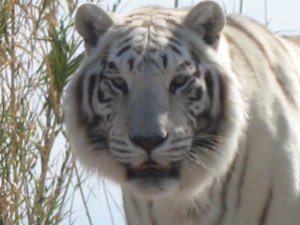
The next big enclosure where I stopped housed a lioness (whose name I can’t remember) and Chalet, a female white tiger. The lioness and tiger grew up together and are best friends!
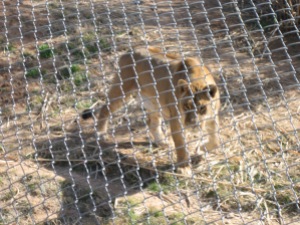
The lioness who is best friends with the white tiger.

The lioness who is best friends with a white tiger.

The white tiger who is best friends with a lioness.

The white tiger who is best friends with a lioness.

The lioness likes to take their toys and hide them. She is not good at sharing!

Chalet and the lioness live in an enclosure surrounded by chain-link fencing. There is a large wooden platform in the enclosure and an observation deck for humans on the outside of the enclosure. I was on the observation deck, as close as possible to the big cats. The VIP tour came along, and Dean Harrison asked Chalet if she wanted to get up on the platform. It seemed like this is a game they play so the tourists can get good photos. When Chalet jumped up on the platform, she was above the level of the fencing, and folks were able to get unobstructed photos of her. When she climbs on the platform, she knows that Dean will toss chunks of meat to her. The lioness stayed on the ground, where she ate the chunks of meat that Dean tossed specifically to her, as well as the chunks that ended up on the ground because Chalet didn’t catch them in the air.

Chalet, the white tiger.

Chalet, the white tiger.

While feeding Chalet and the lioness, Dean Harrison explained that Chalet and the lioness are not trained, they are well-educated. The animals at Out of Africa are not coerced into doing anything. If Chalet didn’t feel like jumping up on the platform and posing for photos, she wouldn’t do it.
IMG_2221

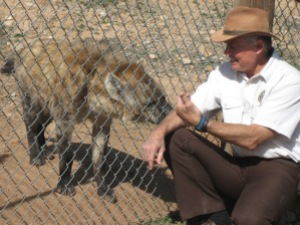
Dean Harrison and Chipa, the female hyena.

Dean Harrison and Chipa, the female hyena.

Next we visited the area where the two spotted hyenas live. There is a female spotted hyena named Chipa and a male spotted hyena named Chitabe. Dean Harrison explained that like all female hyenas, Chipa is in charge. (Another staff member on a later tour told that crowd that a newborn female hyena has more status than any male hyena.) At first Chipa and Chitabe were not interested in the humans, and went deep into their enclosure, away from the tour. After a while, Chipa came back to investigate further, and Dean stooped down so she could sniff him. After quite a bit of sniffing, Chipa eventually pushed her side up against the fence so Dean could pet and scratch her. Dean also explained that the laugh that hyenas are so famous for is not a happy sound. He said if  a human were to hear a hyena laughing in the wild, the human would probably be in trouble! We also learned that spotted hyenas are faster learners than primates and can teach what they have learned to other spotted hyenas.

I just read a bit more about hyenas on Wikipedia, and they are fascinating. There are kind of like cats and kind of like dogs. There are four species of hyenas in descending order of size are Spotted hyena, brown hyena, striped hyena and aardwolf.

At Out of Africa, we did not learn that female spotted hyenas have a pseudo-penis. However, I will include here what Wikipedia has to say about it.

“Although the genitalia of the male spotted hyena is typical by mammalian standards, that of the female closely resembles that of the male; the clitoris is shaped and positioned like a penis, and is capable of erection. The female also possesses no external vagina (vaginal opening), as the labia are fused to form a pseudo-scrotum. The pseudo-penis is traversed to its tip by a central urogenital canal, through which the female urinates, copulates and gives birth.[48][49] The pseudo-penis can be distinguished from the males’ genitalia by its greater thickness and more rounded glans.[11][50] In both males and females, the base of the glans is covered with penile spines.[51][52][53]” (http://en.wikipedia.org/wiki/Spotted_hyena)

If you want to learn even more about the clitoris of the spotted hyena, go here: http://en.wikipedia.org/wiki/Clitoris#Spotted_hyenas.

IMG_2239

The hyena enclosure is next to a shuttle stop, restrooms, vending machines, and food service areas. Nolagirl and I sat at some picnic tables for a while why the girls messed around in a sandy area intended for kids to play in. When we reunited, the girls were hungry, so Nolagirl got in line with them to get food, and I walked around the area.

There was an enclosure where lemurs live along with animals I had never seen before. The photo below shows the animal in question.

IMG_2241Unfortunately, I can’t remember what this critter is called. The lemurs were all up in a tree house sort of space. They all had their backs to the one area where I could have gotten a pretty good photo of them, so I don’t have any photos to share.

I would have been excited to see marmosets in the Marmoset Gardens, but they weren’t on exhibit. Maybe they had gone on vacation.

While I was walking around, I saw a second food kiosk with a shorter line. That kiosk sold pizza. I didn’t think I was hungry until I saw other people eating pizza, then I wanted some too. I got one slice for $3.50, which is about what I expect to pay for a slice of pizza in a touristy area. It wasn’t great pizza, but it was tasty and filling.

After we all finished our lunch, we were just in time to head over to the Tiger Splash Arena.

The Tiger Splash show was intense! I didn’t even try to take photos during the show. I was mesmerized and wanted to experience the show without a camera between me and the action. During the show, while Dean Harrison gave commentary, several humans ran around, stimulating the hunting instincts of the two tigers. The tigers would use their claws and teeth on the toys (and pretty much destroyed the toys), but roughhoused with the people without hurting anyone. Harrison stressed that the tigers could have hurt the humans, but they chose not to because the tigers and humans care for each other and treat each other kindly and have fun playing together.

After the Tiger Splash show, we walked around more and looked at more animals. We saw several tigers and saw a lot of snakes and lizards in the Reptile Resort. One of the coolest snakes we saw was a HUGE amelanistic burmese python named Melanie.
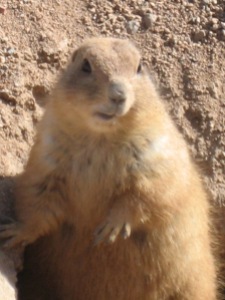
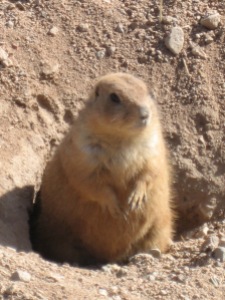
IMG_2252     We spent a lot of time at the Prairie Dog Digs because prairie dogs are so dang cute. We even bought some food for them from a gumball machine type dispenser, but these little critters are totally well fed and were not even interested in the pellets we tossed to them. That was disappointing because we wanted them to eat the food we gave them.
IMG_2254We saw a two-toed sloth! I love sloths. They are my spirit animals. I couldn’t get any pictures of the sloth because it was in its sloth house, wedged between the wall of the house and an upright tree branch. It was so slothy that it had figured out how to sit without holding up its own body weight. It was totally adorable and wonderful, and I wish I did have a photo of it to share.

The last animals we saw as we were walking on the Serengeti Road were wildebeests (also known as gnus). IMG_2259
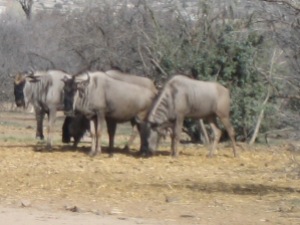
They were milling about together in a group, not doing very much.

The girls wanted to stop at the gift shop, so we did that before leaving. I found the gift shop rather overpriced. I would have bought some postcards, had they been the standard 5 for $1 or a quarter each. I might even have splurged on some 50 cent postcards, but they were $1 each, which just wasn’t in my budget.
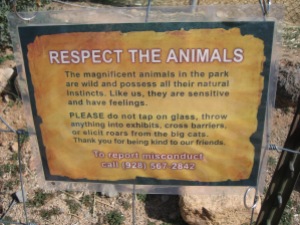
IMG_2242This sign to the right was posted throughout the park. I thought it was a great reminder to visitors. I particularly like the part that says, “Like us, they [the animals in the park] are sensitive and have feelings.” May we all remember that in our daily dealings with all creatures.

I had a great time at Out of Africa and would recommend visiting the park, especially during winter when the temperatures are cool.

I took all of the photos in this post.


Out of Africa, Part 1

Standard

I was originally going to have only one post about Out of Africa, but when I’d written over 2,000 words and still had more to say, I decided to present the tale in more manageable chunks.

IMG_2108Out of Africa is a wildlife park in Camp Verde, Arizona. You can find out everything you want to know about it here: http://outofafricapark.com/.

I’m not a big fan of zoos, and I don’t think I’ve ever been to a wildlife park. I mainly decided to visit Out of Africa because the park grants visitors free admission during their birthday month. My birthday is in February and so is Nolagirl’s so we decided we should go together when we could both get in for free. Also along on the trip were Nolagirl’s daughter LIttle Phoenix and her friend Izzy.

(Sidenote: Earlier in the week, I’d gone to the Goodwill Clearance Center and found four tutus. I bought them and brought them with me when I met the gals before our trip to Out of Africa. I was so pleased by the excitement the tutus caused. Each of the ladies chose one and wore it for the whole day. We quickly began referring to ourselves as “the Tutu Gang.” We received several compliments on our attire and had a lot of fun dressing up.)

After stopping at the ticket office and paying for the girls and picking up our pink happy birthday bracelets, we headed directly to the African Bush Safari Tour. Visitors filed onto a safari tram with no windows and prepared to meet animals up close and personal. Our guide (and driver of the tram) was Lauren.

IMG_2197We stopped first to feed a giraffe named Pilgrim. Lauren told us giraffes naturally have no top teeth, so it is safe for people to feed them. (We were told that zebras, on the other hand, have very strong top and bottom teeth and should not be fed by hand. We were told that if we held five fingers out to a zebra, we were likely to have fewer fingers when we withdrew our hand.)

Everyone in the tram had been given a slender green leafy plant to offer to Pilgrim. He knew the routine and he was waiting for his treats when the tram approached his living area.

Here's Pilgrim leaning into the tram to be fed.

Here’s Pilgrim leaning into the tram to be fed.

Here's Pilgrim leaning into the tram to take a treat from Lauren's mouth.

Here’s Pilgrim leaning into the tram to take a treat from Lauren’s mouth.

We were told that Pilgrim doesn’t like having his face touched and would get upset if we tried to touch it, so we didn’t get to pet him. Being able to feed him was so cool;  it was ok that I didn’t get to pet him too. Now I can tell people that I’ve fed a giraffe!

IMG_2112      IMG_2117

Pilgrim is not the only giraffe that lives in Out of Africa. There is another male, Kibo, who lives there too. The two giraffes were once good friends, but they started fighting over an “imaginary girlfriend,” and now have to live separately.

IMG_2187      IMG_2192

After feeding Pilgrim, we continued on our African Bush Safari Tour. The tram went through a gate, and we rode around in an area where visitors are not allowed to walk. Although the animals are in captivity, they are still wild, and they could easily hurt people who don’t know how to act around them.

The critters below in particular could do some damage.IMG_2139 That is a sable antelope. According to Wikipedia, sable antelopes “inhabit wooded savannah in East Africa south of Kenya and in Southern Africa.” How about another look at those horns? IMG_2138

Unlike most other types of antelope (and deer, elk, etc.) the sable antelope won’t try to run from a predator. Here’s Wikipedia again: “When sable antelopes are threatened by [a] predator, including lions, they confront it, using their scimitar-shaped horns. Many of these big cats have died during such fights.” That’s what our tour guide told us too. If this creature is not taking any shit from a lion, do you think it’s going to put up with some stupid human with a camera acting a fool in its face? I think not. That’s why the stupid humans with the cameras had to stay in the tram.

Next we saw zebras.

IMG_2147     I didn’t see any people sticking their hands out of the tram to see how many fingers they would end up with if they offered five to a zebra.

We learned that zebras are black with white stripes. The clue is that the nose of a zebra is black. Apparently, zebras are entirely black under their fur!

IMG_2148One thing that amazed me about Out of Africa is that the human caregivers recognize each animal individually and by name. While visitors just see a group of zebras milling about, members of the Out of Africa staff know each animal’s name and story. Our guide told us about one young zebra who’s having a bit of an identity crisis. She doesn’t want to hang out with the other zebras. Instead, she’s been hanging out with the other animals in the African Bush area. She’s trying out living with other animals so she can decide what kind of critter she wants to be! IMG_2149

The zebra on the right is the mom. The zebra on the left is her "teenage" daughter.

The zebra on the right is the mom. The zebra on the left is her “teenage” daughter.

IMG_2174

Baby zebra

The photo to the left is of a baby zebra. I believe it was just a few weeks old when I visited. The black stripes on zebras start out brown and get darker as the zebra gets older. Zebras moms are pregnant for 13 months, and baby zebras weigh about 70 pounds when they are born.

IMG_2168The photo on the left shows an addax. It’s got some pretty groovy horns too. But I don’t think it fights lions.

The animal to the right  is one of the watusi (ankole cattle). IMG_2180These were the last animals we saw on the African Bush Safari Tour.

We also saw a camel named Humphrey and an ostrich named Chili-Pepper on the African Bush Safari Tour. Both Chili-Pepper and Humphrey live alone in separate enclosures because they don’t get along with any other animals. When we stopped to see Chili-Pepper, Lauren got out of the bus to interact with her. Lauren showed us how ostriches will instinctively jab their heads at anything right in front of them. She warned us that we did not want Chili-Pepper to hit us with her beak, and suggested we just move out of her range if she approached the tour bus. Lauren also told us that if threatened, an ostrich would not defend itself with its beak. If it could not run away (ostriches run extremely fast), it would fight by delivering a powerful kick and use its inner toe to cut open the enemy.

To read about the predators at Out of Africa, go here: http://www.rubbertrampartist.com/2015/06/03/out-of-africa-part-2/.

All of the photos in this post were taken by me.

Bearanoia

Standard

I wrote the following words in the middle of the night of May 22, 2015.

I shouldn’t have had that coffee. And I certainly shouldn’t have had the Dr. Pepper on top of it.

Sure, I had the coffee before 9am, and I drank the last of the Dr. Pepper by 5pm, but yes, I am so sensitive that I’m awake at 1am.

I read until 10pm, and then I did sleep some–fitfully–but now I’m wide awake. I finally turn on the Luci light and grab my notebook. I can’t lie in the dark another moment.

Why are noises so much louder in the dark?

Not that there’s much noise out here in the forest at 1am. Mostly I hear the popping and thumping of the van as it cools in the night air, but there are also sporadic metallic pings as water (actual raindrops or just the moisture of the fog dripping from the trees, I don’t know), hits the roof of the van. Farther off, there’s a steady dripping sound; I don’t know what or where it is, but it reverberates in the silence.

Black Bear, Eating, Wildlife, Nature, Big, Fur, HabitatDo I hear a bear, or is that the grumble and groan of my own belly? I honestly can’t tell in the quiet dark.

Yesterday when I got home from Little Babylon, night was falling, fog was settling in, and chill was wrapping around, so I cooked in the van. I left the doors open while I did it. Has the odor of food dissipated? Can the bear(s) smell the airborne molecules of my dinner? Will a bear try to rip a van door off in the night to get food that’s now in me?

Bear or belly?

Are those bear footsteps I hear? (What do bear footsteps sound like?)

I’m wearing the shirt I wore to cook in, which I just found out is a no-no in bear country. But if I took it of, it would still be in the van with me, still smelling of tofu and brown rice and peas. (What kind of hippie bear wants to eat tofu and brown rice and peas?) It’s not like I can lock my cooking clothes in the trunk. (No trunk in this van.) But if I’m wearing the cooking clothes, will the bear(s) attack me when it/they rip off my door, lured by the lingering scent of dinner caught in the fabric?

Shit! The paper cup I was drinking Dr. Pepper out of? It’s up front, on the floor next to the driver’s seat. I forgot to throw it away in town. I meant to throw it away as soon as I got to the campground, but I forgot about it again. Bears may not want tofu and brown rice and peas, but they sure as shootin’ want some Dr. Pepper and can probably smell the sticky sweet remnants clinging to the sides of the cup.

Should I get out of the van and walk through the foggy, drippy dark to deposit the cup in the trash can? That seems riskier than staying put.

Trash cans. The trash cans out here are not bear-proof, so it seems easier for a hungry bear to go for a trash can smorgasbord instead of attacking my van which harbors nothing but the faint smell of food. Attacking the trash cans would be so much easier. A trash can in the (bear) hand is worth two girls in a van…

My friend who communicates with angels would say that all this attention on bears is going to make the angels think I want a lesson, and they’ll send a bear my way. I actually address the angels aloud, ask for protection against bears, say I don’t need a lesson, no thank you.

Should I turn on the radio? A classic rock station comes through clear way out here in the trees. Music would mask and distract me from every little noise, but if a bear is indeed snuffling around out there, maybe I do want to hear it.

Don’t think about bears.

Don’t think about bears.

Don’t think about bears.

I locate my whistle. Bears don’t like loud noises. Right? I’d wear the whistle around my neck, but because it’s plastic, the circle used to attach it to things broke when I had it on my key ring in the city. Why didn’t I get a metal whistle before I came out here? Where can I put this whistle so I can find it immediately in the dark?

2:20am

I heard that bears are most active at 4am. Are bears just now waking up, yawning and stretching, thinking about where to get breakfast? I think of the Berenstain Bears and the super annoying cartoon bears on the Charmin commercials. (Who thought it would work to have cartoon bears sell toilet paper? I guess we’re supposed to get the reference to bears shitting in the woods, but as far as I know, bears don’t wipe their asses. Why would I trust a bear to tell me what toilet paper I should buy?) However, if I do see a bear tonight (or any other night in the woods), it’s not likely to be cartoon cute or friendly.

I just want to see a bear from a safe distance. I just want to see one way over there. I do not want to see a bear ripping a door off my van so it can lick the dried Dr. Pepper from the sides of a Burger King cup. I do not want to see a bear eating my shirt.

I just want to sleep. Sleep. Sleep. I just want to close my eyes and sleep.

Folks camping in bear country where there are no bear boxes could use a bear canister for added piece of mind and a better night’s sleep.

Image courtesy of https://pixabay.com/en/black-bear-eating-wildlife-nature-1972228/.


Does a Bear Shit in the Campground?

Standard

IMG_2958

I took this photo on the afternoon of May 18, on the same side of the campground where I saw the bear prints. I think it’s bear shit, but I can’t find an exactly matching picture on Google images. Can anyone confirm or deny?

I should have put something for size comparison in the photo. I didn’t think about size comparison until just now. In any case, it was a pretty big pile. And it’s obviously not from a horse or a cow. What animal could it be from other than a bear?